Niche First, Product Second
Most people start with a product they think looks good. That's why most people fail. The niche is what everything else sits on, your buyer, your angles, your CPMs, your ceiling. Get it right and every module after is easier. Pick at random and every mistake costs double.
Operators who know their niche cold, the words buyers use, the fears they carry, the identity they're protecting, write better ads, source sharper products, and convert more traffic without spending more. Everything downstream gets easier when the niche is solid. Jump niches after 1–2 failed products and you reset all that learning to zero, every time. It's the most expensive habit in early ecom, and it's almost entirely avoidable. Pick one niche. Stay in it for at least 5 real product tests before you reconsider.
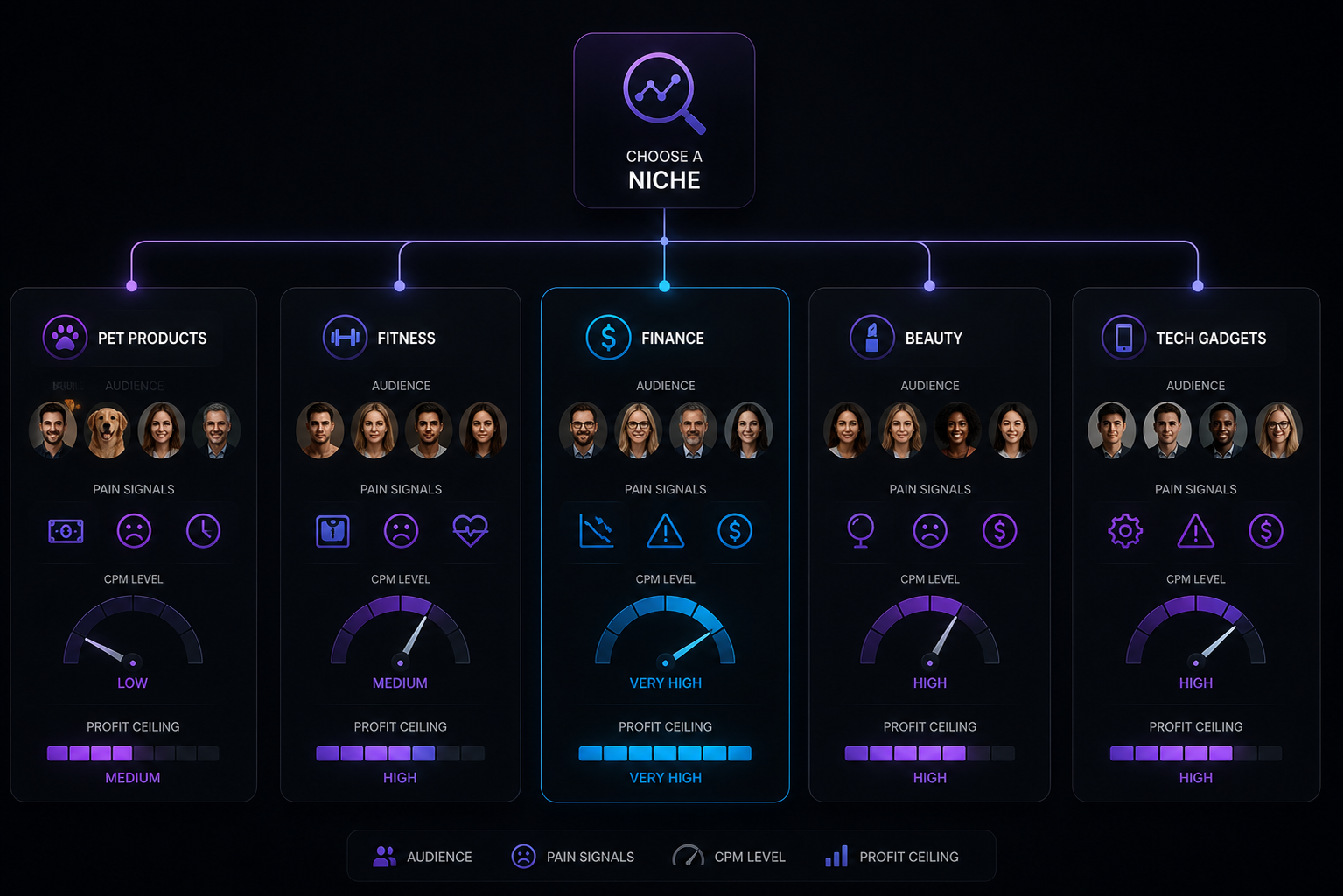
What Makes a Good Niche. The 5 Criteria
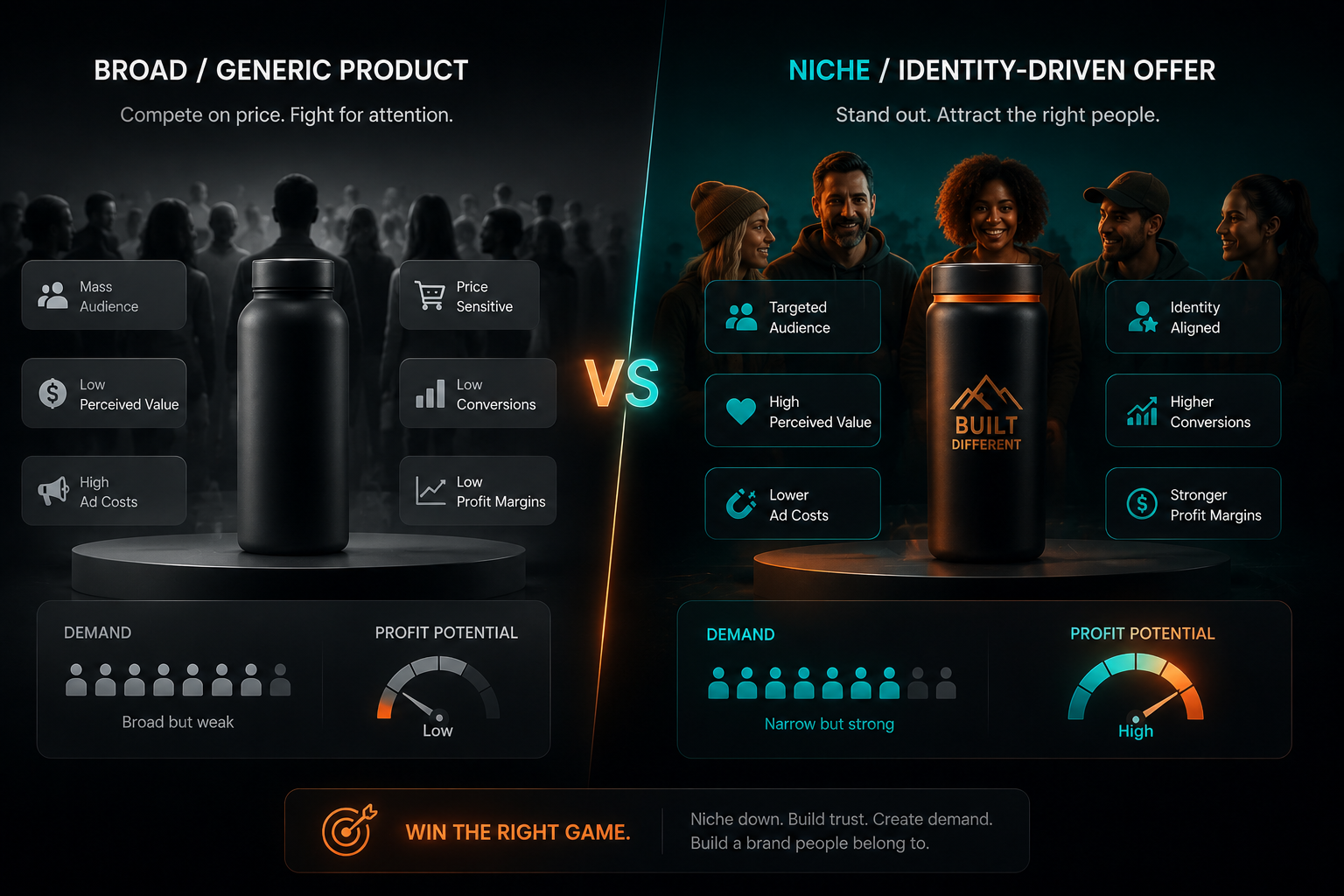
Dog owners aren't buying dog products, they're expressing who they are. Golfers aren't buying gear, they're buying a self-image. Identity niches have higher AOV, less price friction, and repeat buyers. Ask: is there a community, a subreddit, a Facebook group, influencers? If yes, it's identity-driven.
Pain niches (back, knee, sleep, skin) beat hobby niches on early CPAs because the buyer is actively looking for relief. The sharper the pain, the faster the decision. Beginners: start in pain-solving niches where you can promise a specific outcome.
Under $25 is too easy to dismiss ("I'll find it for $5 on Amazon"). Over $120 needs too much consideration for cold Meta traffic. $30–$80 is where impulse meets willingness: high enough for real margin, low enough to buy from a brand you've never heard of.
New operators fear competition. Experienced ones look for it. If brands are running ads in a niche profitably, demand is proven. Your job is to angle differently: better hook, better offer, better targeting. Check Meta's Ad Library before you commit.
A niche that supports 10+ products (not variants of one) lets you test product after product without rebuilding your audience knowledge each time. Knee health: braces, supports, exercise guides, massage tools, supplements. Every product leans on the same buyer research.
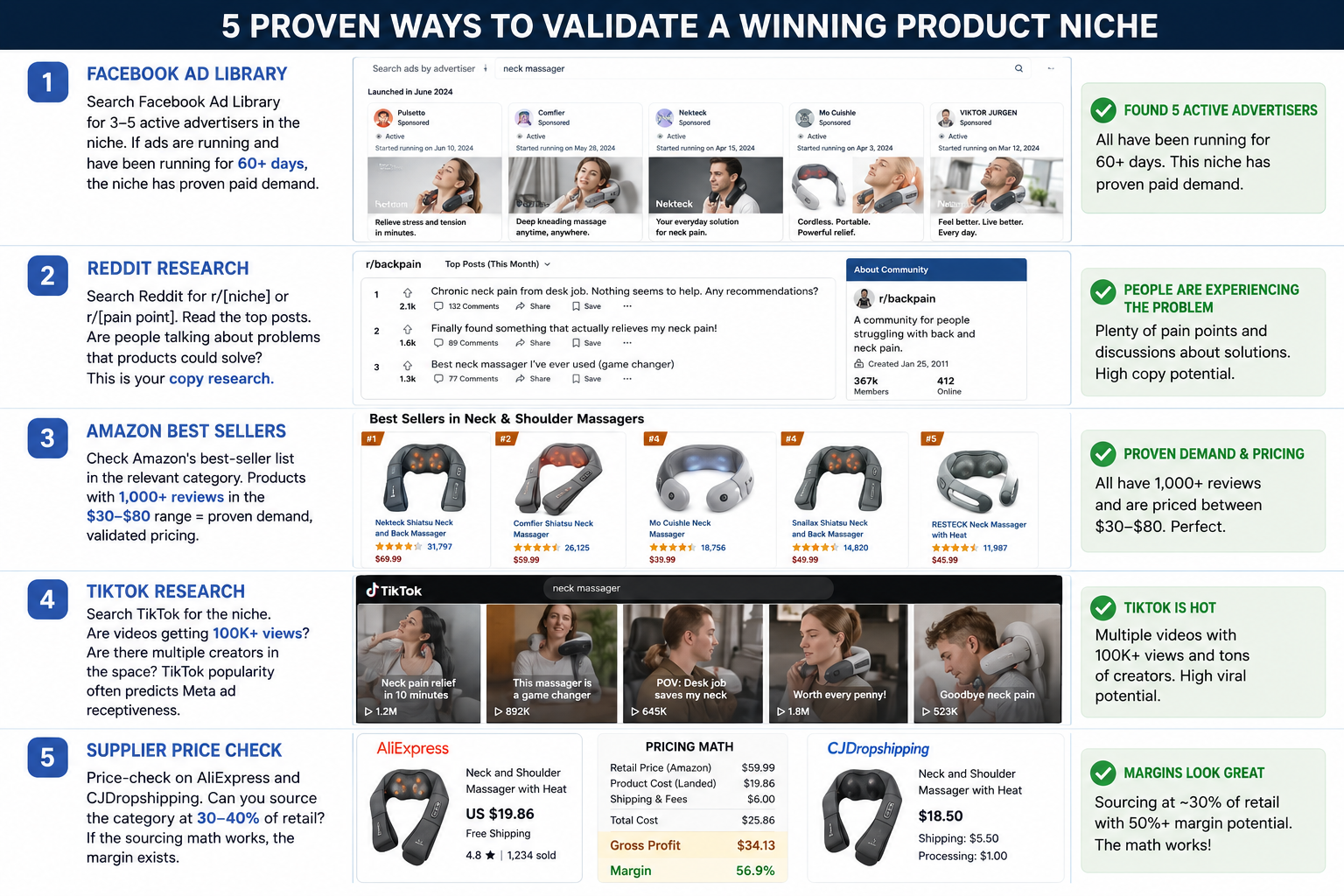
How to Validate a Niche Before Spending Money
- Search the Facebook Ad Library for 3–5 active advertisers in the niche. Ads running 60+ days = proven paid demand.
- Search Reddit for r/[niche] or r/[pain point]. Read the top posts. Are people describing problems a product could solve? That's your copy research.
- Check Amazon best-sellers in the category. Products with 1,000+ reviews at $30–$80 = proven demand, validated pricing.
- Search TikTok for the niche. Videos pulling 100K+ views? Multiple creators? TikTok traction usually predicts Meta receptiveness.
- Price-check on AliExpress and CJDropshipping. Can you source the category at 30–40% of retail? If the sourcing math works, the margin exists.

Validate your niche candidates now
Open facebook.com/ads/library in one tab and reddit.com in another. Search your niche in both. Ad Library: ads running 30+ days? Reddit: an active community talking about the problem? Both yes = viable. Note what you find.
Here's the pattern that kills more beginners than anything else: test 1 product in a niche, it flops, switch niches. Test 1 more, flops, switch again. Six months later they've tested 7 products across 5 niches with nothing to show, because they reset their learning to zero every jump.
The real base rate for a consistently profitable product is 5–15 tests in the same niche. Not 5 across 5 categories. Stay put and your audience intelligence compounds. Your creative research compounds. Your supplier relationships compound. Every test feeds the next one. Stay in your niche for at least 5 real product tests before reconsidering. On product 3 with no winner yet? You're not failing, you're on schedule.
You should now have:
- 1–2 niche candidates you actually want to test
- Confirmed advertising activity in your niche (Ad Library check)
- A rough read on the CPM range and difficulty you're walking into

Quick reference — niche archetypes
How common niche types compare on margin, CPM, saturation, and beginner fit.